The average pickleball court makes $96K. Here is how ours make $187.2K.
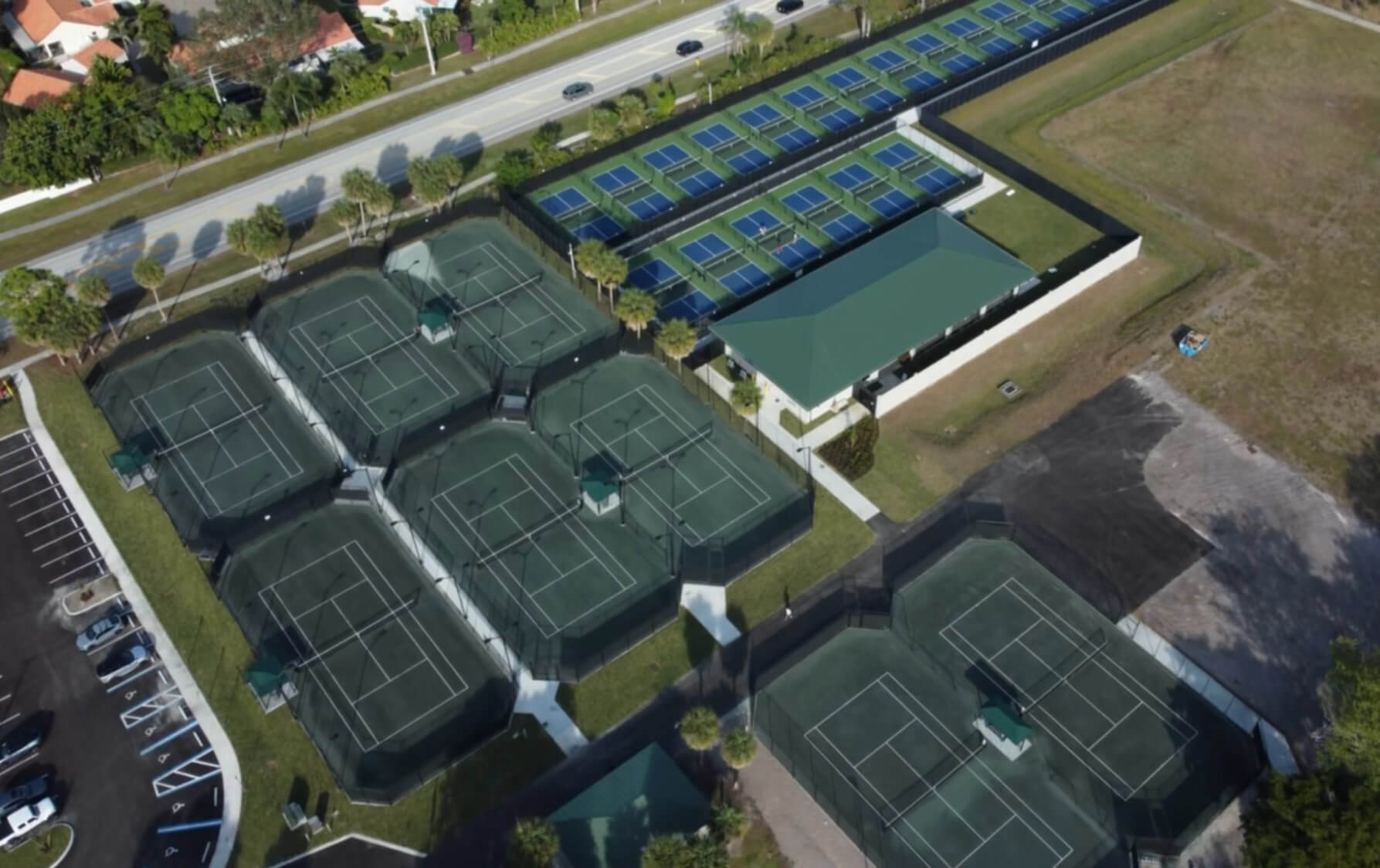
The average pickleball court in the United States makes about $96,000 a year, benchmarked across 250 facilities. The courts we build average $187,200. Nearly double, per court.
That gap is not luck. It is design.
Revenue per square foot is the only number that matters
Most facilities are designed around a vibe. Ours are designed around a number: revenue per square foot. Where the courts sit, how players and staff move, what you charge, how you program the calendar. Every one of those choices either adds to that number or quietly drains it.
Get the layout right and the same footprint carries more play, more lessons, more events, and more reasons to spend. Get it wrong and you are paying rent on space that never pays you back.
The inexperience tax
First-time operators pay a tax they never see on the invoice. It shows up later, on the P&L.
A roofline that shadows the courts in the afternoon. Acoustics treated after the drywall instead of before. Dead square footage that should have been a second revenue stream. Court rates set on a guess. None of it looks like a problem on opening day. All of it is expensive to fix once the building is standing.
We catch it before the concrete is wet.
Design the building around the money
A court is not a court. The difference between a room with nets and a facility that fills is in the details that never make the rendering.
Sightlines that make spectating feel good. Circulation that moves a full house without a bottleneck. A pro shop and food and beverage placed where people actually pause. Lighting and surfacing that hold up to real play and look right on camera. We design every one of those around return, not just around code.
Program the calendar like a P&L
An empty court at 10am on a Tuesday is lost revenue you never get back. Programming is how you fill the hours the market does not fill on its own.
Leagues, clinics, youth, corporate, open play, and events each pull a different crowd at a different time and a different price. Built right, the calendar smooths demand across the week and turns dead hours into margin.
Price with intent
Most operators set rates by looking at the club down the road. That is how you leave money on the floor.
Price is a lever, not a guess. Peak and off-peak, membership and drop-in, court time and programming. We model it so the number reflects what your experience is actually worth, then we hold the line.
Catch it before the concrete is wet
The cheapest time to fix a facility is before it exists. Every dollar of design discipline up front saves many on the back end, and it is the difference between a facility that ramps fast and one that stalls in year one.
If you are serious about building, tell us about your project. You will hear from us within 24 hours. If you would rather start on your own, the Guide is the same framework we charge five and six figures to run.
Building something? Let us pressure-test it.
Tell us about your project. You will hear from us within 24 hours.